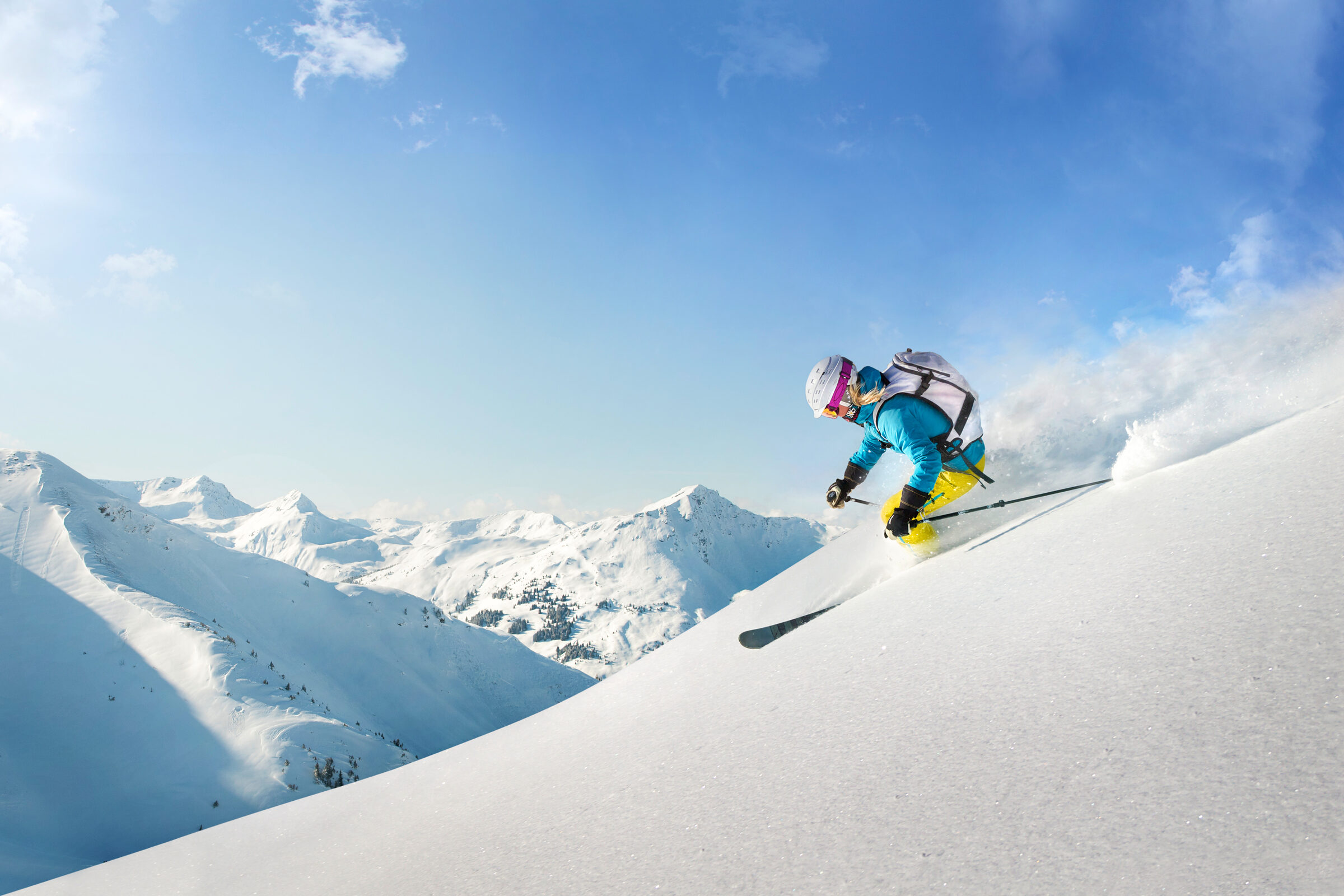
We try to raise the bar every year — not only on the terrain we put people on, but on the informal education that comes with it. Safety protocols and backcountry skills you can take home and use in your own mountains.
We can safely say a week of heli skiing and snowboarding with us in Valdez will be a life-changing experience. That is not marketing; it is just what happens to people here.
The terrain, in numbers
The Chugach
From 50-degree steeps to half-mile-wide glacial powder runs.
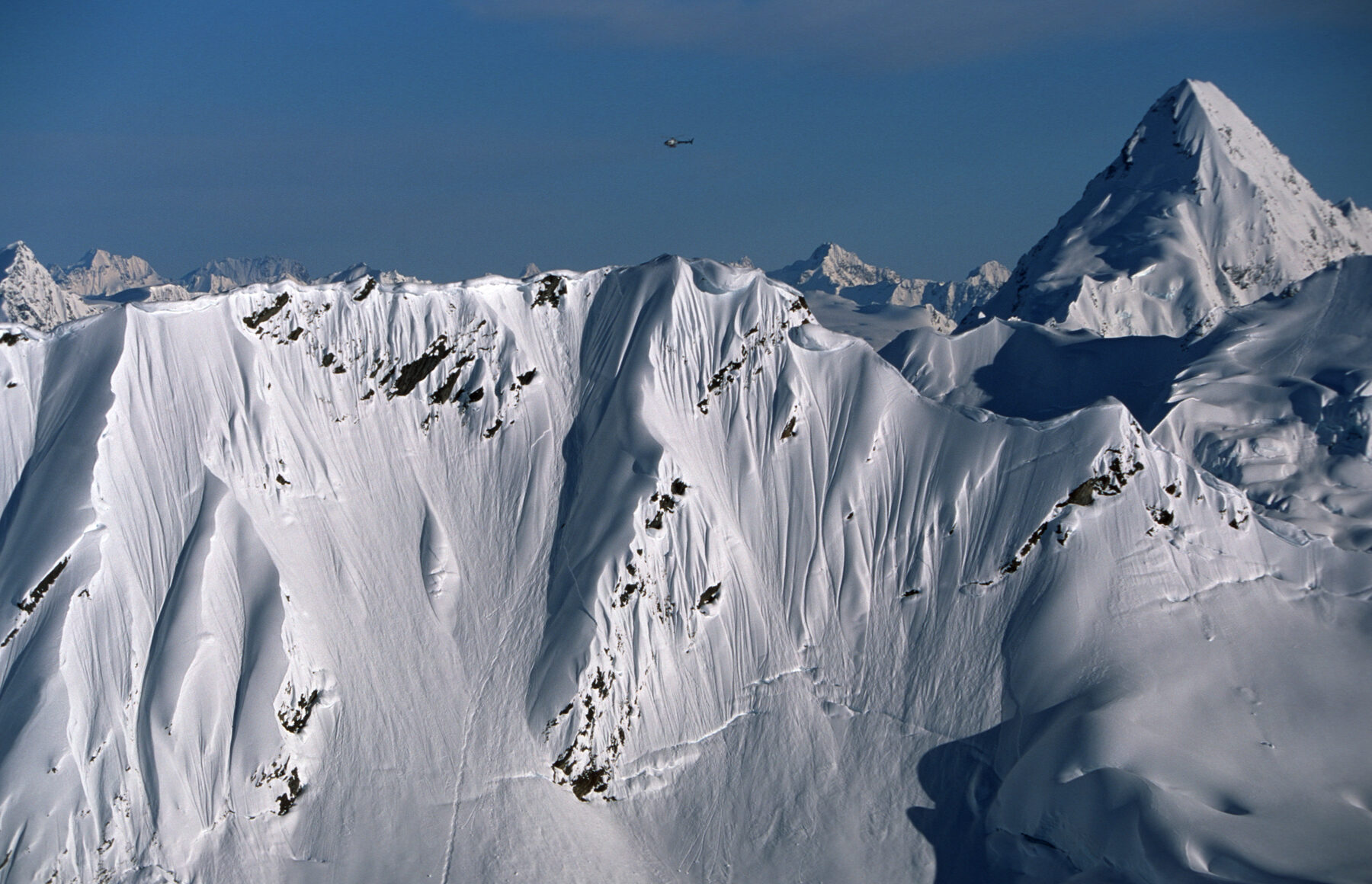
The heli-accessible terrain in the Chugach is genuinely unique. Some of the steepest and best lines anywhere are here, but the range has something for everyone — 30-degree glacial powder runs 5,000 vertical feet long and half a mile wide sit next to 50-degree faces.
Run length varies with where we drop you and where we pick you up, and with where in the range we are working. Every run is different, and we rarely ride the same one twice in a week.
How it compares to Canada
The terrain here is very different from BC. The zones are much bigger, and timberline is much lower — around 2,000 feet — so nearly everything we ride is high alpine, with no trees. The features are on a different scale: long ramps, giant bowls, spines, natural halfpipes, wind waves, extensive couloirs and massive glaciers separated by dramatic rock.
And unlike the group skiing done in Canada, we ride in groups of four to six and send one person at a time. Given the size of the lines and the hazards in them, that keeps the rest of the group out of exposure and lets the guide watch one rider properly.
A typical day
How a fly day actually runs.
This is a genuine sequence — the day runs in this order, and knowing it makes your first morning much less confusing.
Morning & prep
Boots on by 9am. Even with a late start for briefings or weather, all four groups still get plenty of runs. If you are staying in town, an ASG staff member hosts you at breakfast and drives you up to base in the van.
Launch
Depending where we are heading, it can take up to an hour to get all four groups into the field. If your group launches last, stay in or near the common yurt and keep in contact with your guide. Your guide runs a beacon check and positions you for the flight.
Riding
On your first day especially, the guide picks easier terrain for a warm-up run. From there you can ask for more. Your guide will check on the group, but tell them how you are feeling after each run — do not stay quiet about your condition to save face.
Rest & snack
The helicopter returns to base to refuel at least once a day. That is the moment to sit in the sun, rest your legs and eat. We are not touring, so you do not need a 3-litre bladder — but carry at least a 16 oz bottle.
Back to base
Your guide will tell you whether to step out as usual or stay in until the engine is shut down. Once clear of the pad you can de-boot and store gear in the common yurt. We keep the fire going so it is dry for you in the morning.
Après
Stories, smiles and drinks while the sun goes down over base. If you are staying in town, the van leaves when everyone is ready — no set schedule, unless you are catching the evening flight out, in which case we arrange transport.
Safety
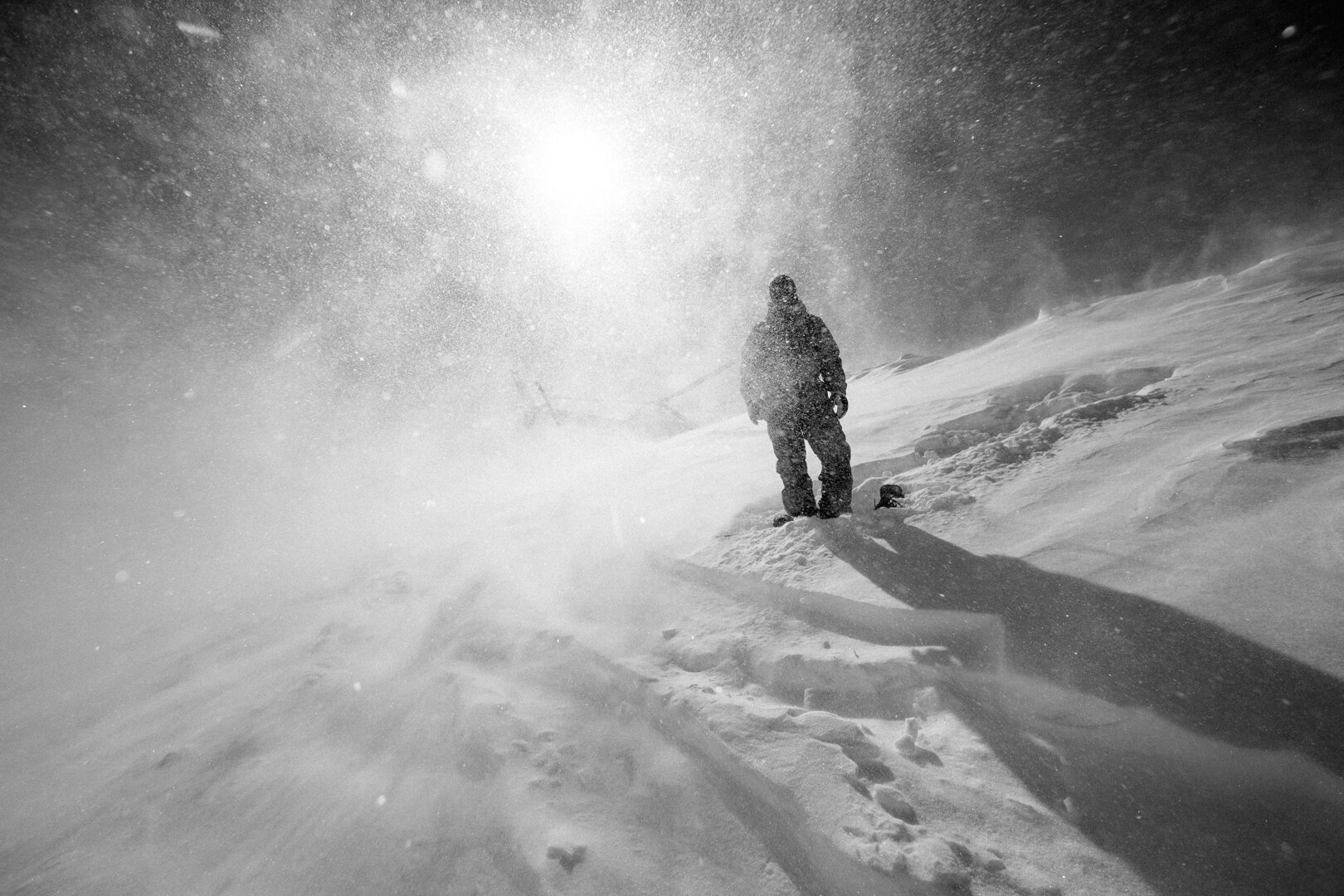
Safety is the top priority, and it is mostly about terrain choice.
Backcountry skiing and snowboarding carry real risk. Our job is to reduce it through terrain selection, communication, standardised protocols and — above all — experience. ASG continually sets operational standards for safety specific to the heli industry.
Guest briefing
After you arrive, one of our guides runs an extensive briefing: beacon use, companion rescue, strategic shoveling, terrain management, backcountry protocol, helicopter safety, and the terrain features particular to Alaska.
Twice-daily guide meetings
Guides meet each morning to plan the day and again each evening to review it — the day's events, snow conditions, concerns, stability, group dynamics, avalanche hazard and forecasting. We keep detailed logs of those discussions and daily observations, which is why a guided day here is a different proposition from going out on your own.
We are also happy to share safety information with other operators and with anyone camped on Thompson Pass near our base.
The aircraft
The AS350 A-Star.
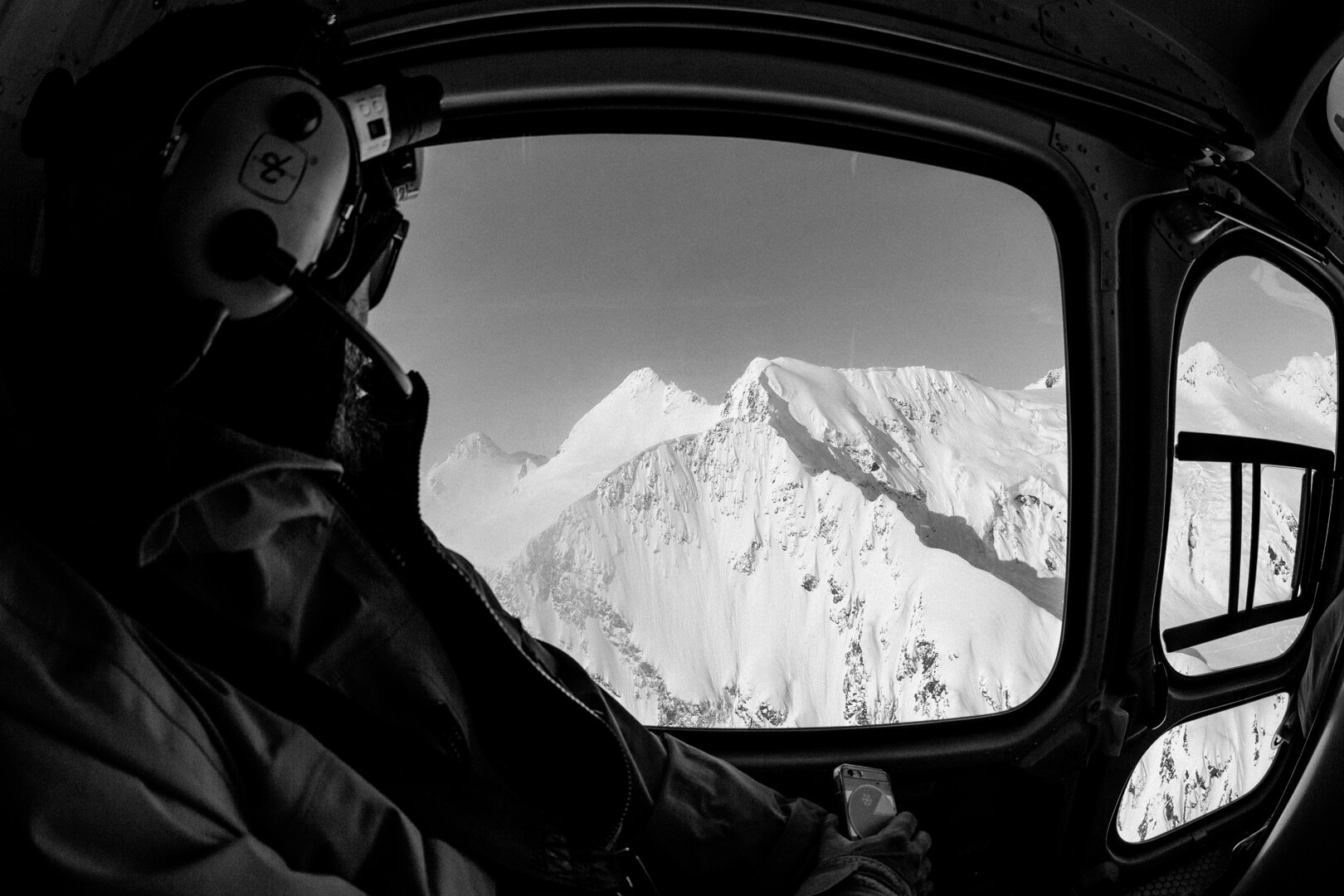
The A-Star seats a pilot, a guide, and four or five guests. It is small, agile and single-turbine, which lets us run small groups and land in tight spots on narrow ridge lines — the reason it is the right aircraft for this range.
We fly with Precision Helicopters as our primary provider: experienced heli ski pilots and mechanics who look after the aircraft daily.
Every aircraft carries FAA satellite tracking, so base can see the helicopter's position and status all day. Each one also carries:
- EPIRB and VHF radios
- DeLorme inReach two-way satellite communicator
- Rescue sked and rescue kit
- Trauma kit and O₂ kit
- Overnight supplies
Fitness
How fit do you need to be?
You do not need to ride like a professional. You need to be reasonably fit physically, reasonably fit mentally, and proficient enough on your board or skis — and the good part is that untracked, light powder is easier to ride than the chopped-up snow you are used to at home. Steeper slopes make gravity your friend and transitions come easier. You relax and go with it.
Practically: if you can ride powder out west once it is tracked and chunky, you will be fine here. Get to a confident advanced-intermediate level on wide open slopes, be comfortable side-slipping into a steeper entrance, and you are ready. If you can stay out for five hours on a chilly day, your legs will hold up — and after every run you get back into a heated helicopter.
The best preparation is riding. Get out as much as you can in the months beforehand, even in bad conditions. If you cannot, stay in reasonable shape: an exercise bike a few hours a week builds both aerobic fitness and leg stamina. Because knees take most ski and snowboard injuries, strengthen around them — wall sits, calf raises, lunges, straight leg raises, hamstring curls. Then stretch, before and after.
Mentally is another story. Even very fit riders burn energy being scared. Standing on top of a steep peak above a serac-riddled glacier is intimidating, and there is no substitute for experience — breathe, and remember your guide does this for a living. Everyone has a first run up here before they get relaxed at the drop-in.